One of the most frustrating parts of embroidery is threading a needle with all those strands of embroidery floss. But there are several ways to accomplish this easily—all without licking the thread.
Start by learning when and how to separate the strands of embroidery floss without tangling them, then try the two methods below to see which you prefer and to thread your needle like a pro.
Before you dive in, though, it’s important to note that cross stitch and embroidery needles have larger eyes than needles designed for sewing or quilting. The size of the eye matters when adding multiple strands of thread, and you should choose a needle size that is suitable for the thickness of the thread you’re using.
With your embroidery needle and fresh-cut floss ready to go, all that’s left is to thread that needle. Here are the steps to take.
What You’ll Need
Equipment / Tools
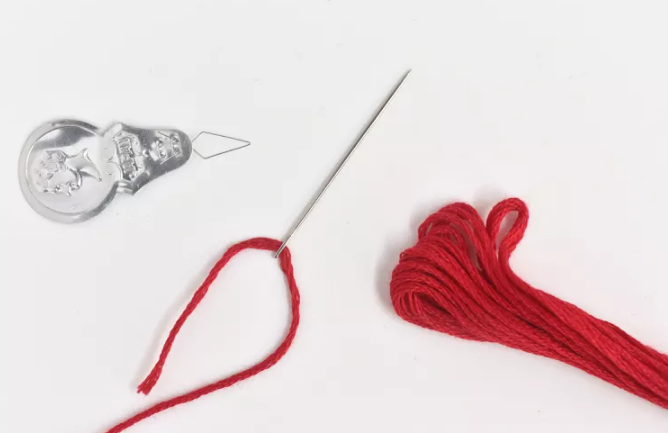
- Embroidery needle
- Needle threader (optional)
Materials
- Embroidery thread
Instructions
Step 1:
Separate the Strands
Although there are different kinds of embroidery threads, the most common type is stranded cotton embroidery floss. This type of thread is made up of six strands, so you can divide it as needed. Separating the strands allows you to stitch with varying thicknesses.
Using all six strands together makes great chunky lines and lets you jump right into stitching. Just be sure to use a large enough needle and fabric with a looser weave (like evenweave linen); otherwise, it can pucker the fabric and cause frustration.
Tip
Only divide or separate stranded threads designed for splitting. Twisted threads such as perle cotton, floche, and novelty thread should not be separated.
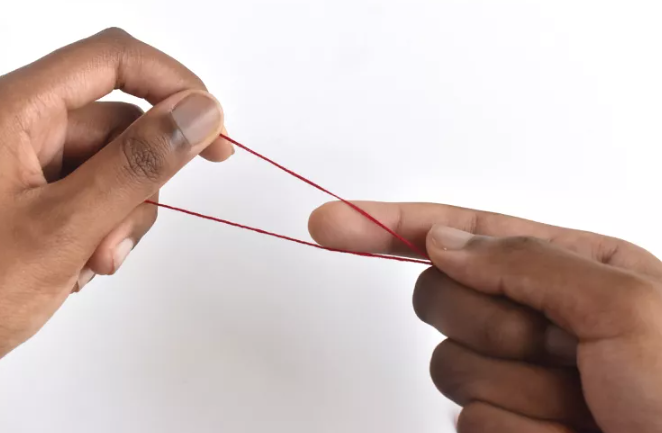
To separate stranded cotton floss, cut a piece about the length of your forearm (or a little longer).
Tap the end to make it easier to see the individual strands. Start separating as many strands as you need, then hold the split end in one hand. Slowly draw a finger on your other hand down the thread to divide it.
When you reach the end, let the groups of thread untwist, and they’ll be ready to go.
Step 2:
Threading Without a Needle Threader
It’s common to see people moistening embroidery floss (or any thread) to try and work it through the eye of a needle, and while that can work, it’s not ideal. For one thing, it’s a little gross when threading a needle for someone else! It also doesn’t guarantee success, so you might end up with soggy thread.
You may also have seen (or tried!) the method of squinting while attempting to guide the thread through the needle. Again, that can work, but it’s much harder. Instead of holding the embroidery floss as you see below, with the thread end showing, change your grip.
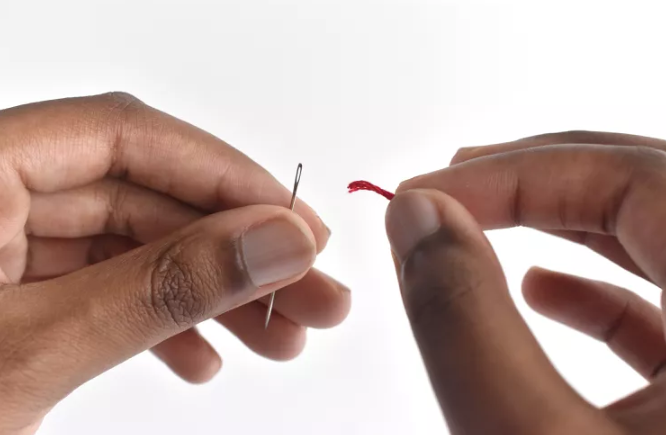
First, it always helps to start with freshly snipped thread cut with sharp embroidery scissors.
Hold the end of the thread between your thumb and index finger on your dominant hand. You should barely be able to see the thread.
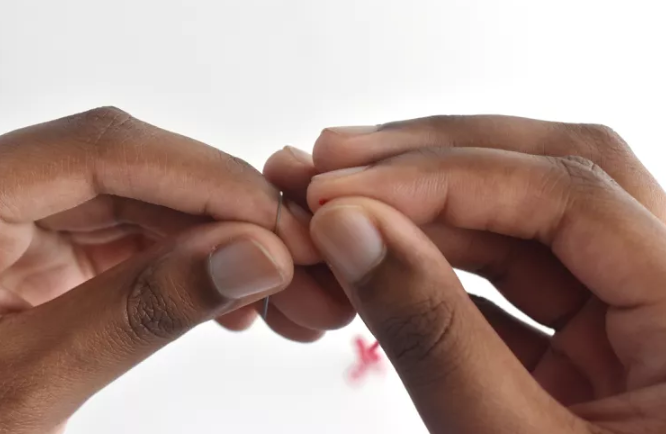
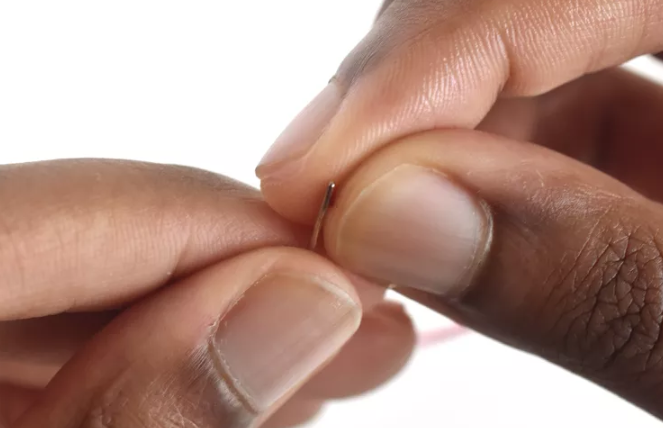
Bring the needle’s eye to the thread and push through the needle while squeezing the embroidery floss.
Finish pulling the thread through the needle.
This process can take a bit of practice, but as long as you have the needle eye facing the right direction, you can do it without relying on strong eyesight. If you still struggle to thread the needle this way, you can also try coating the end with a bit of beeswax or thread conditioner.
Step 3:
Using a Needle Threader
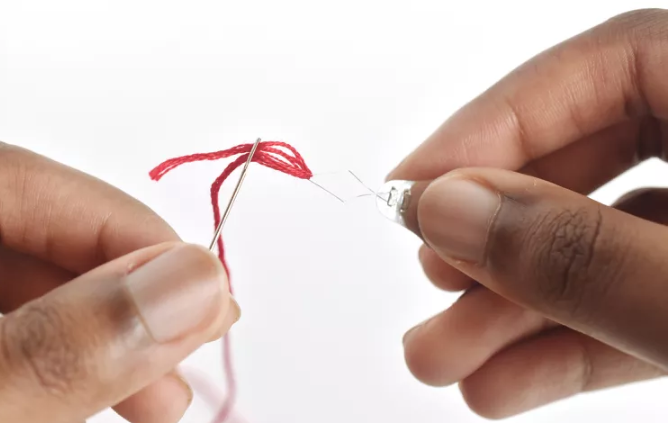
If you’d prefer some extra assistance, try using a needle threader. These handy little tools pull the thread through the needle for you. The classic version has a small metal handle with a bent loop of wire, but other versions include one with a hook and a desktop threader.
To use a basic needle threader, insert the loop or hook through the eye of the needle.
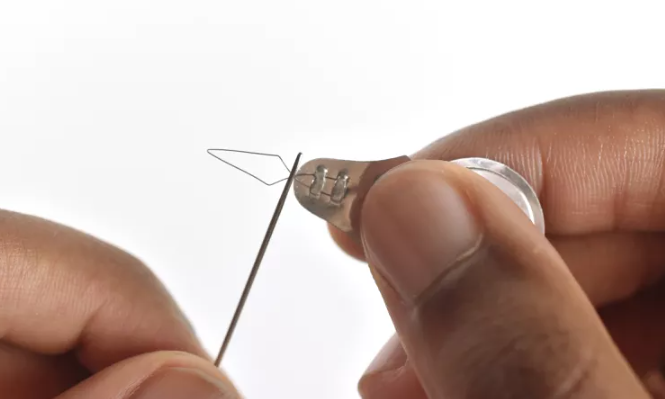
Place the end of the embroidery floss through the loop or hook on the needle threader.
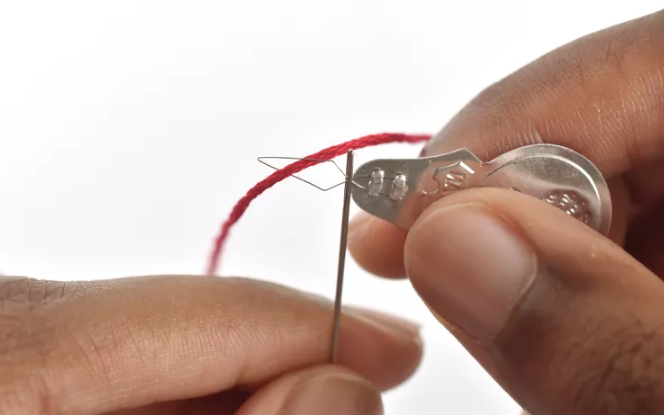
Use the needle threader to pull the embroidery floss through the eye of the needle. If you use thicker embroidery thread, such as perle cotton or all the strands of stranded cotton, work it through gently so as not to tug the wire loop off a basic threader.