
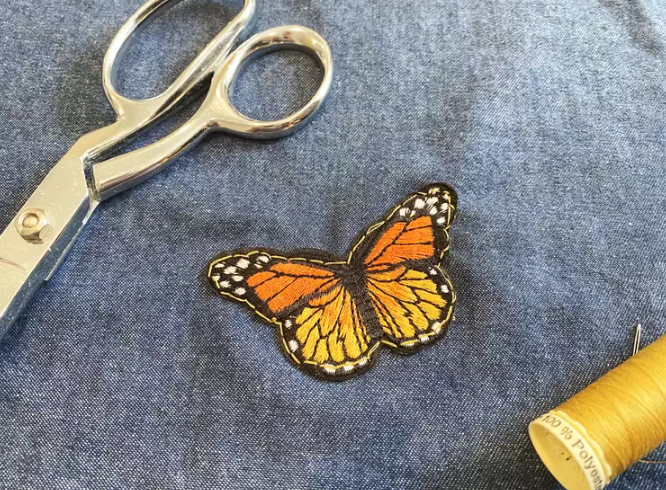
Project Overview
Sewing on a patch involves a simple hand-stitching technique that even a beginner can handle and can take less than an hour to complete. In this easy tutorial, we’ll go through each step of the process, from threading your needle to tying off your thread. Then you will be ready to add a patch to jeans, bags, jackets, and other fabric items. Whether you want to cover a tear or just add some flair, keep reading to find out how to sew on a patch.
Tip
Choose a hand-quilting thread or jeans thread for extra durability. These threads are much stronger than traditional cotton or polyester thread.
What You’ll Need
Equipment / Tools
- Sewing pins or Iron
- Sewing needle
- Scissors
Materials
- Patch (sew-on or iron-on)
- Piece of clothing, bag, or fabric
- Thread
Instructions
Step 1:
Decide Where Your Patch Is Going
The first thing you want to do is decide exactly where you want your patch to go. Is it covering a tear? Are you looking to place it on a knee or elbow? Decide where you’d like to sew it on. If you’re covering a tear, this is a good time to make sure that the patch is large enough to cover the entire hole or rip.
Step 2:
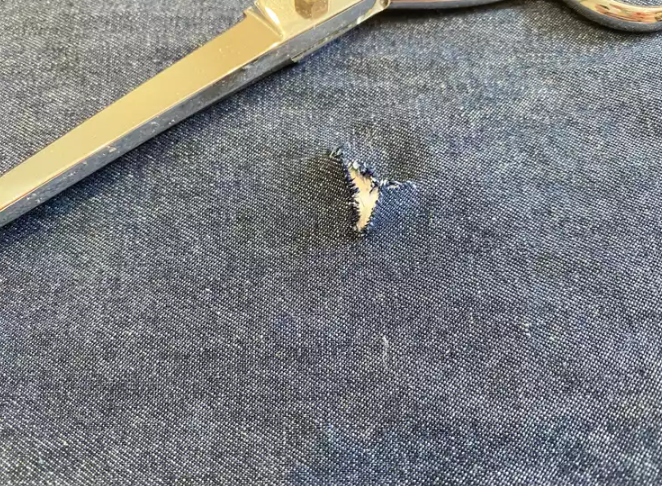
Clean Up Tear
You’ll need to clean the tear before you start to sew on your new patch. Cut off any white threads and fluff that may appear around the hole.
Step 3:
Iron Down or Pin the Patch
Look at the back of your patch. If it looks shiny or has a thin paper covering it, it’s an iron-on patch. That means that, in theory, you can just iron on the patch and go. However, once you do laundry a few times, the iron-on patches will come off. That’s why sewing down even iron-on patches is a good idea.
An iron-on patch is handy while placing a patch for sewing as it adheres the patch to the fabric, making it easier to sew. Follow the directions included with the patch to iron it on. This holds the patch in place while you sew it on for extra durability.
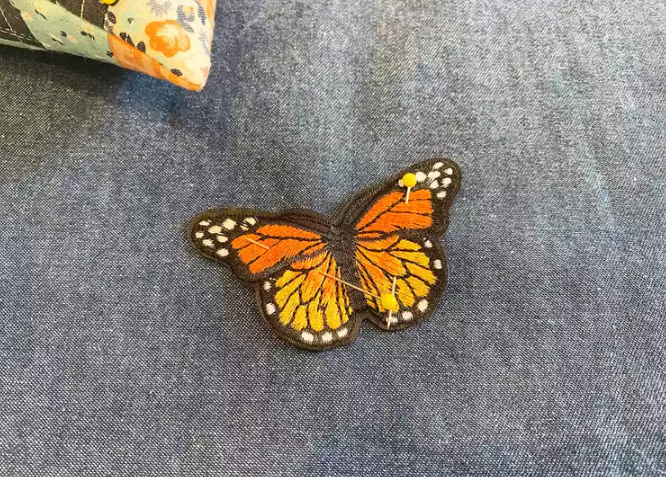
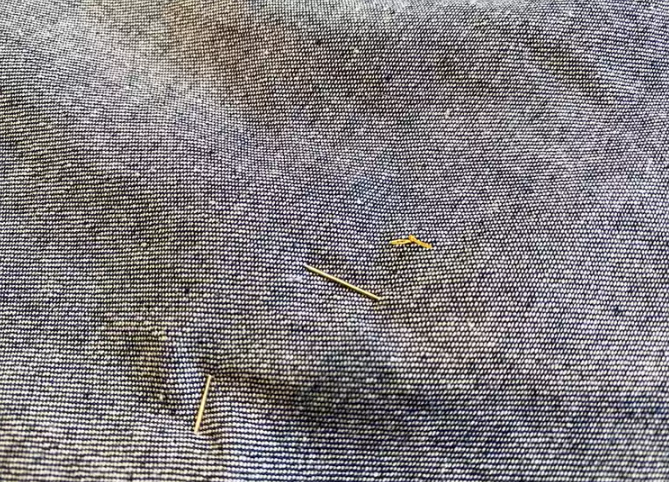
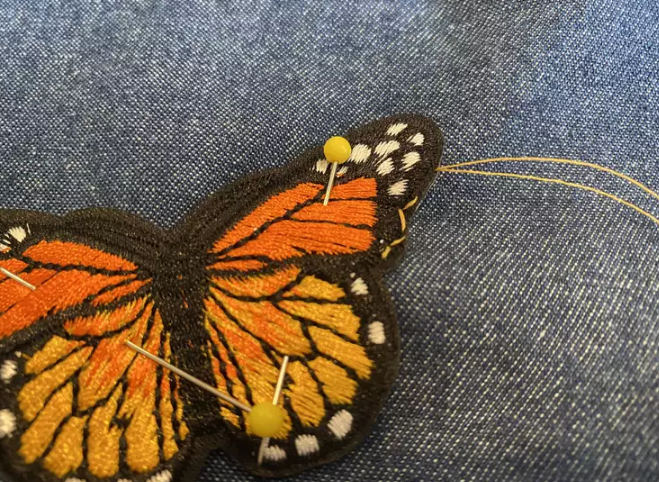
If you have a sew-on patch, you’ll want to use sewing pins to pin it down. This is going to be awkward because the patch is so thick, but use strong pins (as few of them as you can) to secure the patch so you can sew it on.
Step 4:
Thread Your Needle
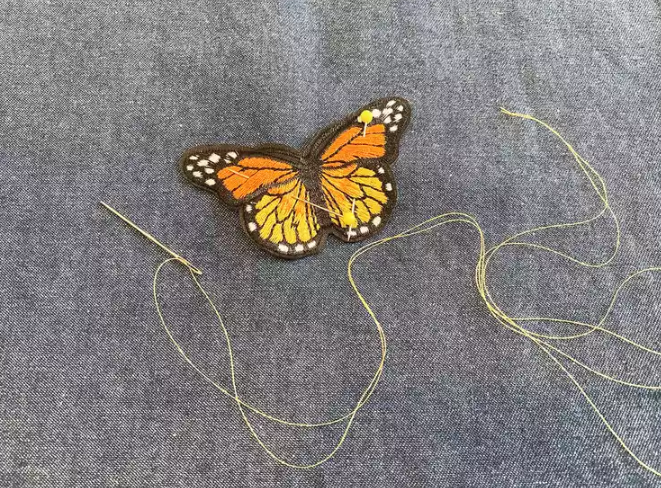
Time to start sewing on your patch! Pick a thread that matches or contrasts the color of your patch, depending on the look you’re going for (a contrasting thread color is used here.) Grab your needle and thread and thread the needle. Double up on the thread and tie a knot at the end.
Tip
You can also use embroidery thread and a blanket stitch to attach a patch.
Step 5:
Start Your Backstitch
Start your backstitch by pushing the needle up through the fabric and the patch, and bring it all the way through so the knot is on the wrong side. You can start sewing anywhere on your patch.
You may run out of thread as you’re stitching down your patch. That’s okay, just knot it off and pick up where you left off with a new thread.
Step 6:
Continue Stitching
Make a backstitch by pushing your needle into the fabric and patch, about 1/4 inch to the right from where your needle came up before. Push all the way through.
Now come up with the needle 1/4 of an inch to the left of your first stitch. Put your needle back down into the hole where you first started.
Continue backstitching until you’ve reached the point where you started. Remove any pins as you come to them.
Tip
If your patch is pinned down, you’ll need to be extra careful that it stays in place. Every few stitches, make sure that it’s still in the spot you’d like it to be.
Step 7:
Finish Your Backstitch
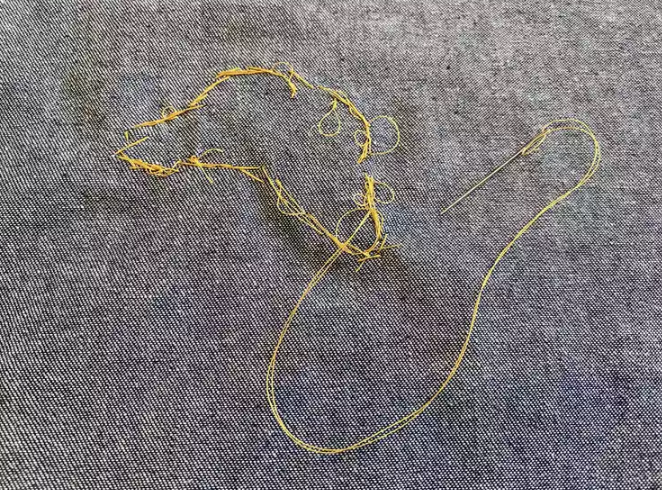
After you’ve backstitched all the way around the patch, it’s time to tie it off. Knot your thread tightly on the backside of the fabric. You can double- or even triple-knot it for extra security.
Tip
Still worried about the patch not being secure? You can backstitch around it multiple times to make sure it will stay put.
Step 8:
Cut Your Threads
After you’ve tied your knot, you’re ready to cut your threads. It’s time to off that new patch! Since you sewed it on, you won’t have to worry about it coming off in the wash. The only way this patch is coming off is if you decide to remove it.